
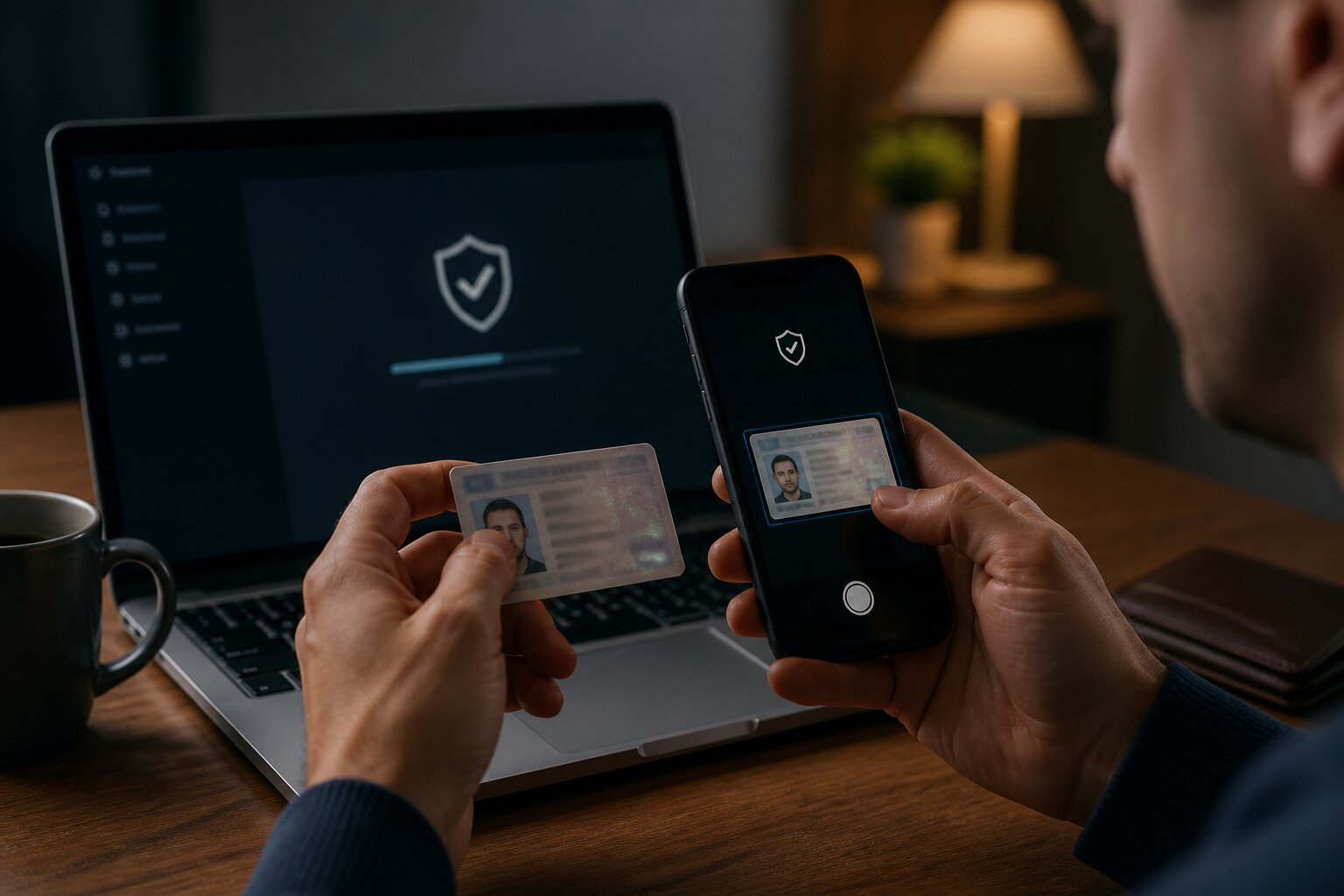
Ever wondered why, after signing up to an online casino, you’re suddenly being asked to share documents like your driving licence or a recent utility bill? Many new players find these requests surprising or worrying at first, but there are clear reasons behind them.
These checks are part of a wider process that helps sites operate legally and protect everyone using them. In the sections below we’ll explain what verification involves, why it matters, and how to get through it quickly and securely.
Curious to know what happens after you upload your documents and what to do if something goes wrong? Read on — each part builds on the last so you’ll end up with a complete picture.
What Is ID Verification at Online Casinos?
ID verification is the step where a casino confirms who you are by checking official documents. Typical requests include a passport, driving licence, or a recent bill that shows your address. This process is commonly called KYC, which stands for Know Your Customer.
KYC aims to prevent fraud, identity misuse, and financial crime while ensuring only people of legal age can gamble. For players, it means the site is taking steps to keep accounts and funds secure, and to make sure rules are followed.
Verification also reduces the risk of unauthorised account access and helps resolve disputes more quickly, because the operator can match activity to a confirmed identity. In short, it’s both a protective measure for you and a compliance measure for the operator.
Why Do Casinos Need Your Documents?
Casinos request documents to confirm age, identity, and address, and to prevent criminal activity such as identity theft and money laundering. These checks are not arbitrary; they support the integrity of the service and help keep financial transactions transparent.
Age verification is a key element — operators must be confident a player is old enough before allowing them to deposit or play for real money. Beyond that, matching names and addresses reduces the chances of someone opening accounts in another person’s name or using stolen details.
There is also a consumer-protection angle: knowing who is using the account makes it easier for the operator to spot unusual behaviour and take appropriate steps to protect a customer or the wider player base. The combined effect is a safer, fairer environment for everyone involved.
How Does ID Verification Work?
After you register an account or request a withdrawal, the casino will prompt you to upload the required documents via its secure website or app. The uploads are reviewed by trained staff or automated systems that check the authenticity, legibility, and consistency of the information provided.
Most sites explain exactly which files they need and give guidance on acceptable formats and file sizes. If a scan or photo is unclear, the operator will ask for a better copy. When everything is in order, verification is marked complete and any account restrictions are lifted.
This system is designed to be straightforward: the operator asks only for what is needed to confirm identity and ensure regulatory compliance, and you get the reassurance that the account is being managed properly.
What Types of Documents Are Accepted?
Casinos accept official, current documents that clearly prove identity and address. Common examples include the following.
- A passport, driving licence, or national ID card to confirm identity.
- A recent utility bill or bank statement to confirm your address, usually within the last three months.
- Occasionally, proof of source of funds such as a payslip or bank statement if required for larger transactions.
Make sure all documents are legible and the details match the information on your account to avoid delays.
How Long Does Casino Verification Take?
Verification times usually range from a few hours up to 48 hours, depending on the operator’s workload and whether any documents need to be re-submitted. Clear, properly formatted uploads speed the process up considerably.
If additional checks are necessary, for example to confirm source of funds, the process can take longer. You’ll typically receive updates by email or via your account dashboard so you know when the review is complete.
UK Gambling Regulations & KYC Requirements
Operators in the UK must follow regulatory standards that include carrying out KYC checks. These measures are intended to prevent underage gambling, money laundering, and other illegal activity while protecting genuine customers.
Typical document requests align with those already described: official photo ID plus recent proof of address, and sometimes evidence of the source of funds for larger transactions. The checks form part of an operator’s wider compliance responsibilities and help maintain transparent records of customer activity.
These regulations are why you will see consistent verification requirements across different sites. The process helps both the customer and the operator by ensuring activity on the account is legitimate and traceable when needed.
What Are the Benefits of Verification for Players?
From a player’s perspective, verification provides a layer of protection. It reduces the risk of someone else opening or using an account in your name and makes financial disputes easier to resolve because the operator can match transactions to a confirmed identity.
Verification can also speed up payouts once completed, since the operator has already confirmed your details. That certainty is useful when you need reliable access to your funds or if there is ever a question about account activity.
Overall, the checks build trust between the player and the operator, helping ensure that the gaming environment is properly regulated and that your personal and financial information is managed as securely as possible.
Is It Safe to Share Personal Documents Online?
It is reasonable to be cautious about sharing personal documents. Reputable operators use encrypted connections and secure storage to protect the files you upload, and access is limited to authorised staff who need the information to complete verification.
Always upload documents through the casino’s official site or app, and check for standard security indicators such as a padlock in the browser. If you have doubts, the operator’s privacy policy should spell out how your data is handled and for how long it is retained.
If you are asked for documents in an unusual way or via an unsecured channel, decline and contact customer support through the site or app to clarify. Using the operator’s secure tools is the safest approach and helps keep your information confidential.
How to Submit Your ID Securely
Use the upload tool on the casino’s official site or app and ensure photos or scans are clear and complete. Avoid sending documents through email or messaging apps, which are less secure. A well-lit photo that shows every corner of a document and all text is usually accepted first time.
If you need reassurance, check the operator’s stated verification procedures or contact support through the official channels. The operator will only request what it needs to confirm your identity and will advise you if additional documents are required for specific circumstances.
Taking a careful approach to the upload reduces the chance of delays and helps the operator complete the checks efficiently.
Common Myths About Casino ID Checks
Some myths can cause unnecessary concern. One is that verification is unsafe; in practice, reputable operators handle documents in secure systems and follow data protection rules. Another is that you can use informal channels like email for uploads; this increases risk and is discouraged.
A further misconception is that checks are merely a tactic to delay payouts. In reality, verification is a regulatory requirement and a safeguard for both parties. If you are unsure why a particular document is needed, asking customer support for a clear explanation usually resolves the issue quickly.
Stick to the site’s official upload system and seek clarification through its support channels if anything feels unclear.
What Happens If You Refuse to Provide ID?
If you decline to provide the requested documents, the operator cannot complete the verification process and will restrict account functionality. This typically means you cannot make withdrawals or access certain services until verification is finished.
It is not punitive; rather, it reflects the legal and operational limits placed on operators who must ensure that they know who is using their services. If you have concerns about privacy or how your data will be stored, customer support can explain the safeguards in place and why the checks are necessary.
Cooperating with reasonable verification requests is the most effective way to restore full access to your account and resolve any pending transactions.
Troubleshooting: Problems With Verification
Verification problems are usually straightforward to fix. Blurry photos, mismatched details, or outdated documents are the most common issues, and each has a simple remedy: rescan or retake images in good light, correct account details if they contain an entry error, or provide a more recent bill.
- Blurry or unclear documents: retake the photo with good lighting and ensure all corners are visible.
- Mismatched information: check the spelling and address on your account and update if needed, or explain any recent name changes to support.
- Outdated documents: upload a document dated within the timeframe specified by the operator.
If your account has been restricted, the restriction is generally lifted once the correct documents are accepted. Contact support through the official site or app if you need guidance — they can explain which documents will resolve the hold and what to expect next. Once verification is successful, your account returns to normal and any blocked transactions can proceed.
Final statement: completing ID verification is a routine but important part of using an online casino — once you’ve submitted clear, valid documents through the site’s secure channel, you’ll have a verified account and smoother access to the services you need.
**The information provided in this blog is intended for educational purposes and should not be construed as betting advice or a guarantee of success. Always gamble responsibly.