
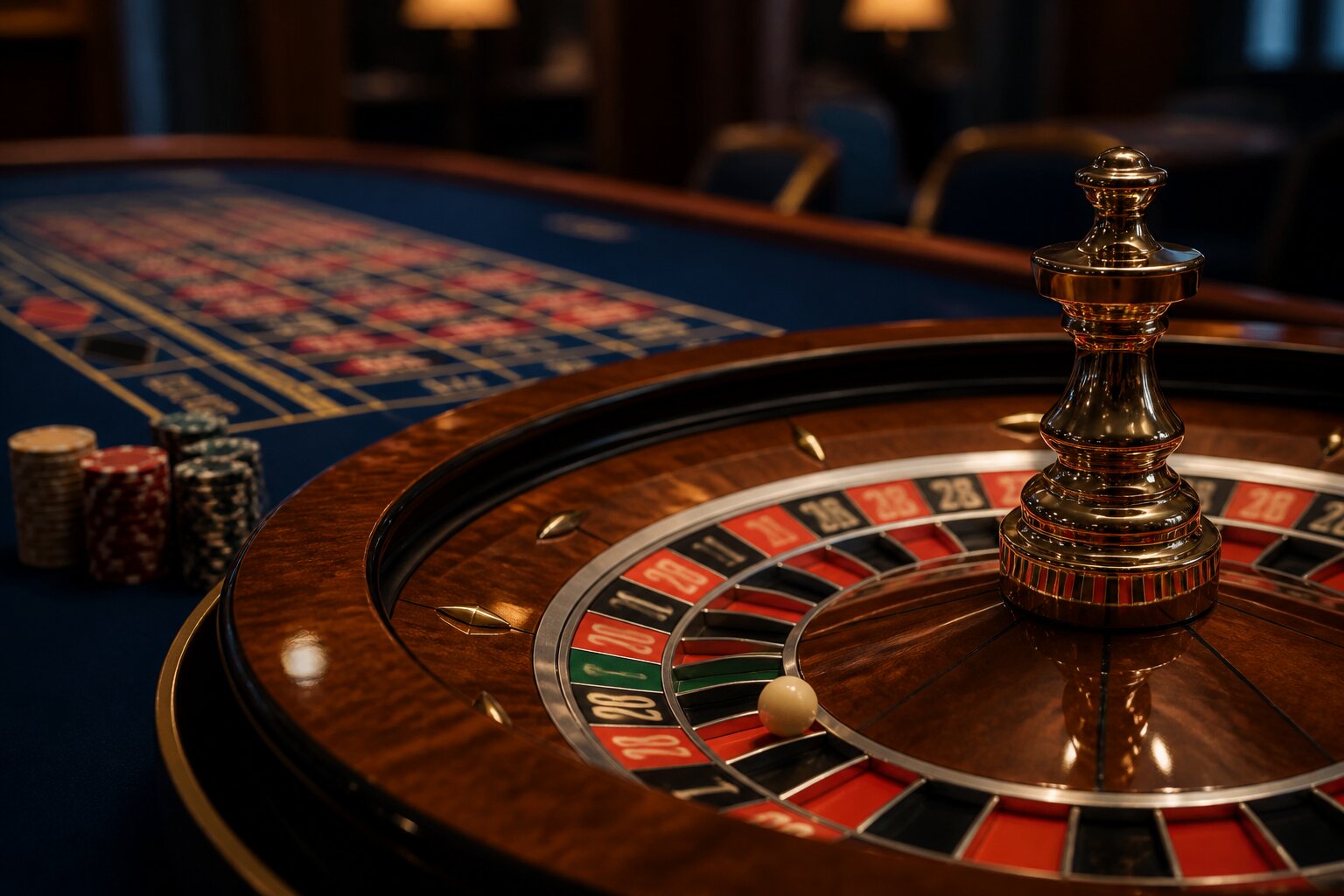
Looking to add a touch of French flair to your casino experience? French Roulette is a classic table game with elegant rules and a distinctive wheel layout that make it stand out from other roulette versions.
This guide explains what makes French Roulette different, how the wheel and table are arranged, and how the special rules affect play. Whether you’ve never tried it or just want a clearer picture of the differences, you’ll find everything here in plain language.
Read on to explore the wheel, the bets, common misconceptions, and practical tips to help you feel confident at the table.
What Is French Roulette?
French Roulette is one of the earliest forms of the game, with roots in 18th-century France. It shares much with European Roulette—most importantly, a single-zero wheel—but its table markings, terminology and a few special rules give it a distinct character.
The wheel has 37 pockets numbered 0–36, with numbers placed in a non-sequential order around the rim. The table uses French terms and includes additional betting areas that you won’t always find on other roulette layouts. These features combine to create a familiar yet slightly different experience for players who prefer something a little more traditional.
The game is straightforward to follow, though outcomes are random by design. Later sections explain those unique rules and how they change the way even-money bets are handled.
French Roulette Wheel Layout Explained
The wheel itself contains 37 pockets: a single green zero and 36 red and black numbers. The single-zero configuration provides a lower house edge than wheels that include two zeros, and the spacing of numbers around the wheel is deliberately non-sequential to mix high and low numbers, colours and odds/evens.
The table layout mirrors the wheel but uses French labels and includes additional betting areas. Outside the numbered grid you’ll see sections for large-group bets such as red/black, odd/even, and the “dozens” (1–12, 13–24, 25–36). French tables also include areas for announced or “call” bets—these are wagers on wheel sectors rather than positions on the grid. Common announced bets are Voisins du Zéro (neighbours of zero), Tiers du Cylindre (thirds of the wheel) and Orphelins (numbers not covered by the other two).
Those announced bets are placed differently from standard inside and outside bets: they refer to clusters of numbers on the wheel itself, which makes them useful if you want to back a spread of positions rather than individual grid spots.
How Do The Rules Differ From Other Roulette Versions?
At a glance, French Roulette will feel familiar, but a couple of rules set it apart. The most important are La Partage and En Prison, both of which apply to even-money outside bets when the ball lands on zero.
La Partage returns half of an even-money stake if zero appears, reducing the effective house edge on those bets. En Prison lets an even-money bet remain “imprisoned” on the table for the next spin: if that bet wins on the following spin, the stake is returned; if it loses, the stake is forfeited. These options make even-money bets more forgiving than on tables without them.
Another difference is terminology and layout: the table markings and announced bets are rooted in French naming, which can change how you place some wagers. Finally, unlike American Roulette, which includes both 0 and 00, French and European wheels use only a single zero, which changes the overall odds and payouts.
These distinctions don’t alter the random nature of each spin, but they do affect the strategic value of some bets and the house edge on even-money wagers.
How To Play French Roulette Step By Step
Playing French Roulette is approachable without being prescriptive. Players exchange cash for chips, place chips on the table to indicate chosen bets—whether on a single number, a colour, a dozen, or an announced sector—and the dealer (or the online interface) spins the wheel and launches the ball. When the ball settles in a numbered pocket, that number is declared and winning bets are settled according to the payout for each bet type.
In a live setting the dealer will announce that no more bets are accepted once the ball is spinning; online games visually freeze betting at the same point. Payouts vary: straight-up number bets pay more because they cover a single outcome, while even-money and outside bets return smaller payouts because they cover many numbers.
After results are paid, players may keep winnings on the table for new bets, cash out chips, or change their staking strategy. The flow is continuous and familiar to anyone who has seen a roulette table in action.
What Are The Bet Types In French Roulette?
French Roulette offers a range of betting options suited to different playing preferences, broadly divided into inside and outside bets. Inside bets cover specific numbers or small groups on the main grid, while outside bets cover larger groups or characteristics such as colour or odd/even.
Inside bets include single-number wagers (straight up), splits (two numbers), streets (three), corners (four) and six-line bets. Outside bets include red/black, odd/even, high/low (Manque/Passe), and dozens. Announced bets, explained earlier, let you back wheel sectors like Voisins du Zéro, Tiers du Cylindre and Orphelins and are placed via the dealer or the special area on the table.
Each bet type has a fixed payout that reflects the number of outcomes it covers: the fewer the outcomes, the higher the potential payout. Understanding these differences helps you match the level of risk you want with the size of the possible return.
What Do Terms Like "La Partage" & "En Prison" Mean?
Those terms describe how even-money bets are handled when the zero appears, and they have practical effects on the probability profile of those wagers.
La Partage immediately refunds half of a losing even-money stake when the zero comes up, while En Prison leaves the full stake on the table for the next spin; if it wins on that spin, the original stake is returned, otherwise it is lost. Both mechanisms reduce the effective long-term loss on even-money bets compared with versions of roulette that simply take the whole stake when zero appears.
These rules are applied only to qualifying bets and are a key reason some players prefer French tables: they soften the impact of the zero on outside wagers without changing the basic randomness of each spin.
Common Myths About French Roulette Ruled Out
French Roulette attracts a number of persistent myths. Clearing these up makes it easier to approach the game with realistic expectations.
Myth 1: Past spins can predict future results. Each spin is independent; results do not form reliable patterns that influence subsequent outcomes.
Myth 2: Betting systems beat the wheel. Strategies that change stake sizes do not alter the underlying probabilities; they can’t overcome the house edge and may reach table or bankroll limits that stop them from working as intended.
Myth 3: Certain wheels have “lucky” numbers. On a properly maintained wheel, there is no mechanical or statistical reason for one number to be inherently more likely than another.
Understanding these points helps focus attention on enjoying the experience and choosing bets that match your appetite for risk.
It’s helpful to consider a few practical tips before you play, so the next section gives straightforward guidance to get you started.
Essential Tips For New Players
Get familiar with the table terms and the layout before placing significant wagers; knowing where inside, outside and announced bets sit will make play smoother. Begin with modest stakes so you can sample different bet types without risking much capital, and decide on a budget you’re comfortable with before you start.
Pay attention to which rule—La Partage or En Prison—applies at the table you join, since that affects the value of outside bets. Take regular pauses if the session feels long; stepping away helps maintain perspective.
Above all, treat the game as entertainment and plan your session so that spending remains within your limits.
FAQs About Playing French Roulette In The UK
Here are answers to common questions players in the UK often ask.
Who can play French Roulette in the UK?
You must be at least 18 years old to play. Venues and operators check age as part of standard compliance procedures.
Is French Roulette legal in the UK?
Yes. It is permitted when offered by licensed operators who meet regulatory requirements.
How do I know the game is fair?
Land-based wheels are subject to routine maintenance and checks, while online games use independently tested random number generation to ensure each spin is fair and unpredictable.
Can I get help if I think I’m gambling too much?
Support is available through tools such as deposit limits, timeouts and self-exclusion, and independent organisations offer advice and assistance if you need it.
Are the rules different online and in the casino?
The core rules are the same in both environments, although presentation, betting limits and available features may vary.
If you have any other questions about French Roulette, or would like to try a table yourself, explore our available games and tables to find the format and limits that suit you.
**The information provided in this blog is intended for educational purposes and should not be construed as betting advice or a guarantee of success. Always gamble responsibly.