
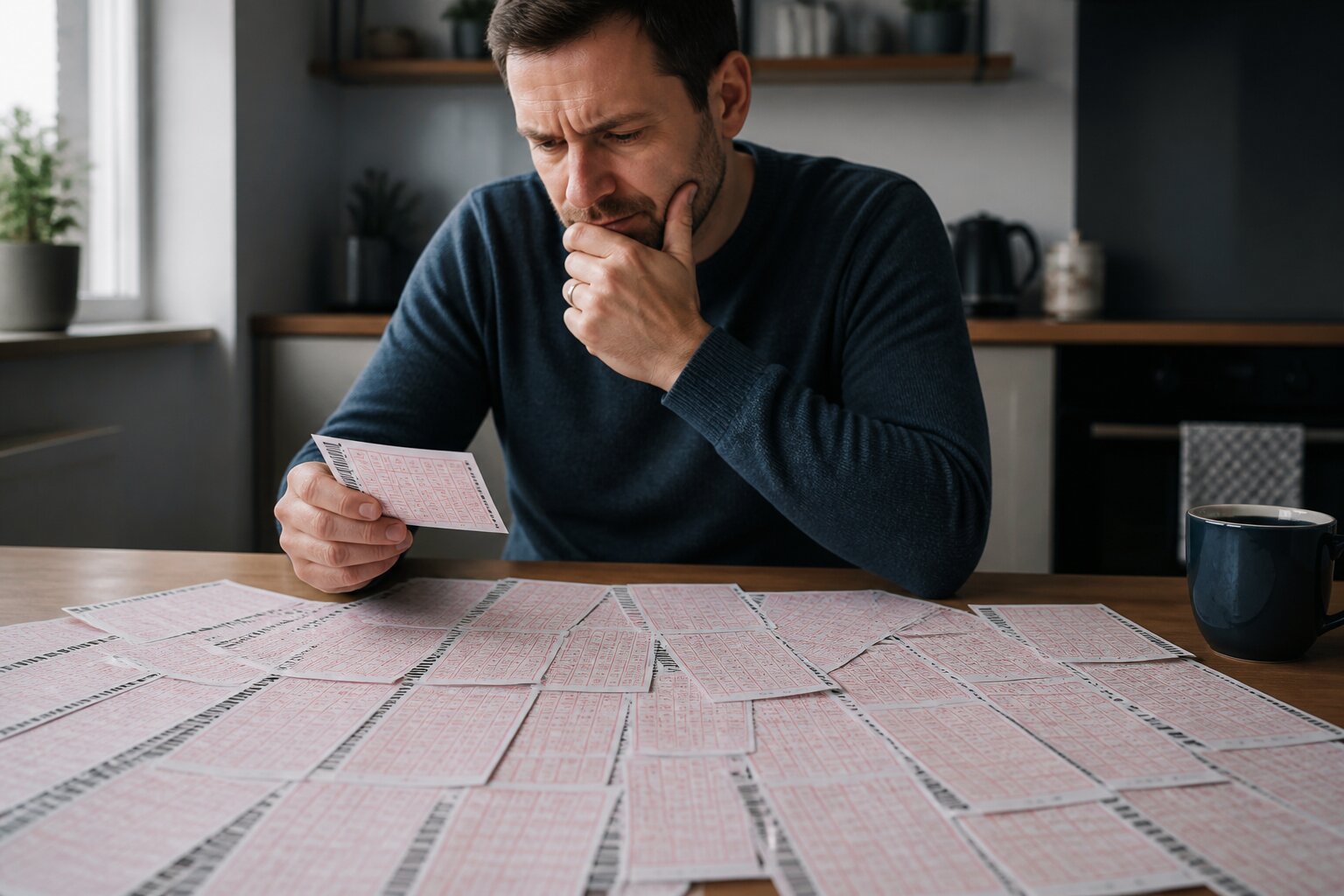
Winning the lottery is a common daydream, and many people wonder whether buying more tickets will meaningfully change their chances. Some buy a single entry, others pick up a handful, and some consider larger purchases — for example 27 tickets — hoping the numbers will finally line up.
This article examines what buying extra tickets actually does for your odds, explains the maths behind draws, and looks at the practical and ethical issues involved. Read on to get a clear picture before you decide how much to spend on the next draw.
Is It True That Buying More Lottery Tickets Improves Your Odds?
Purchasing additional tickets increases the number of entries you hold, so in a strict numerical sense your chance of matching the winning combination goes up compared with holding a single ticket. If you hold two entries, you have twice the chance of a single-ticket player; 27 tickets give you 27 chances rather than one.
That improvement, however, is often far smaller than people expect. National lotteries commonly have millions of possible combinations, so moving from one to 27 entries changes the probability from a single chance among millions to 27 chances among millions. The result is still an extremely small probability of winning any top prize. Each ticket remains one independent entry in a vast field of possibilities, and there is no purchase level that converts those small chances into a certainty.
While more entries can modestly raise the likelihood of a prize, the financial cost and the remaining improbability are the main realities to weigh up before buying multiple tickets. The next section explains the maths so those realities make sense.
How Lottery Probability Actually Works
Grasping the underlying probability helps to understand why even dozens of tickets rarely make a decisive difference. Lotteries are constructed so that the total number of distinct outcomes — every possible combination of numbers — defines the basic odds.
The Mathematics Behind Lottery Draws
If a game lists its odds as one in 14 million, there are 14 million unique combinations available. Each ticket you buy represents one of those combinations. When the draw happens, one combination is selected at random from that set, and every entry has an equal chance of matching it.
Because draws treat each ticket independently, the probability attached to each remains fixed. Buying another ticket is like adding one more entry to a very large pool; it raises your numerator (the number of entries you hold) but the denominator (the total possible outcomes) generally stays the same and is typically very large.
Examining the Impact of Multiple Tickets
Holding multiple tickets changes the raw probability in a simple way: your chance of holding the winning combination equals the number of your distinct tickets divided by the total number of combinations. So 10 tickets in a 14-million-combination game gives a chance of 10/14,000,000. That is a better chance than a single ticket, but still a very small one in practical terms.
Because of this mathematical structure, no selection strategy or pattern of purchases can alter the formal odds. The next section looks at whether, even in theory, buying every combination could guarantee a win — and why that idea falters once real-world limits are considered.
Can You Guarantee a Win By Buying Enough Tickets?
At first glance, the concept is straightforward: if every possible combination is covered by tickets you own, one of them must be the winner. In practice, this approach meets overwhelming obstacles.
Theoretical Possibilities vs Real-World Constraints
To cover every possible combination would require buying a ticket for each one. For games with tens of millions of combinations this becomes prohibitively expensive. For example, at £2 per ticket and 14 million combinations, the outlay would be £28 million before any prize is considered. Beyond the direct cost, preparing, submitting and organising that volume of entries presents major logistical challenges.
Even if the financial and administrative hurdles were somehow solved, other factors reduce the attractiveness of this strategy: prizes can be shared if multiple people pick the same winning numbers, administrative costs and taxes (where applicable), and the possibility that the net return would not exceed the total spend. In short, buying every combination is theoretically certain but practically unworkable.
Common Misconceptions About "Buying Every Combination"
The idea that persistence or exhaustive purchasing guarantees a net gain overlooks the sharp difference between theoretical certainty and practical viability. The expense, the chance of splitting prizes, and the administrative complexity mean the strategy rarely — if ever — makes economic sense. Understanding these limits helps set realistic expectations about what additional spending can and cannot achieve.
Having seen why absolute guarantees are unrealistic, it’s important to weigh the personal costs and risks of buying many tickets; the next section explores those financial and behavioural considerations.
What Are the Costs and Risks of Buying Multiple Tickets?
Multiple-ticket play can be costly, and those costs add up faster than many expect. Repeated purchases over weeks or months can become a meaningful drain on personal finances, especially if they replace other spending priorities.
There are several risks to consider: drifting into regular high expenditure, using money intended for essentials, and chasing past spending in the hope of recouping losses. Joining syndicates can reduce individual outlay, but it also reduces any single member’s share of a prize. Administrative issues and disagreements over payouts can also arise in group play.
The sensible response is to approach ticket buying as a discretionary expense, set clear limits, and treat any outlay as entertainment rather than an investment. With that context in mind, it helps to understand how lotteries remain fair and impartial in how winners are selected; the next section discusses those safeguards.
The Role of Randomness and Fairness in Lottery Outcomes
Lotteries operate on principles designed to ensure every entry is treated equally. Regulated draws use strict procedures, independent auditing and secure equipment to maintain transparent and impartial results. These safeguards protect the integrity of the game and reinforce that no player can influence outcomes.
Because draws are impartial by design, strategies claiming to predict or influence results are unfounded. Historical draw patterns do not create future correlations; each draw is a separate process governed by the same rules and protections. Knowing this makes clear why buying additional entries is the only thing that changes an individual’s raw chance, and why even that change is limited by the size of the overall outcome set.
Understanding the system’s fairness helps when considering common myths about ticket buying and persistence, which are addressed next.
Busting the Myths Around Lottery Ticket Purchasing
There are several persistent beliefs about how to improve lottery prospects; most do not stand up to scrutiny.
Does Persistence Matter?
Some people believe that playing continuously will somehow increase their long-term chances beyond the simple arithmetic effect of buying more tickets. In reality, each draw is an independent event. Regular participation only increases the total number of entries you have over time, but it does not change the probability attached to any single future draw.
It can help to separate the emotional appeal of persistence from the mathematical reality. Feeling that persistence gives an edge is understandable, but statistically each ticket faces the same odds regardless of past outcomes. Treating lottery play as a series of independent events helps keep expectations realistic.
Are Group Syndicates a Shortcut to Winning?
Syndicates allow members to pool money and buy more entries collectively, which increases the group’s chance of winning a prize relative to an individual buying the same amount on their own. However, any prize won by the syndicate is divided among all members, which reduces each person’s individual share. In addition, syndicates introduce practical considerations such as agreed rules for splitting winnings and ensuring everyone pays their share.
Syndicates can be a social and budget-friendly way to take part, offering a way to play larger numbers than one might afford solo. They do not, however, alter the fundamental odds of the game or provide a guarantee of personal gain. Members should be clear about the arrangements and realistic about the likely outcomes.
Dispelling these myths should leave you clearer about what additional tickets actually accomplish. The next section outlines the legal and ethical framework that governs participation, which shapes how lotteries operate in practice.
Legal and Ethical Aspects of Lottery Participation
Lottery play is subject to legal restrictions and ethical standards intended to protect players. Most jurisdictions require participants to be adults and enforce age checks to prevent underage involvement. Operators must follow regulatory requirements that promote transparency, prevent criminal misuse and provide safeguards for those at risk of harm.
Ethical practice includes responsible marketing, clear terms and conditions, and access to support for people who may develop harmful patterns of play. Operators also implement verification processes for prize claims and measures to ensure draws are audited and traceable. These controls are in place to create a fair environment and to support player wellbeing.
With the legal and ethical framework in mind, the final section brings the discussion to a practical verdict on whether buying more tickets is a sensible choice for most people.
Conclusion: Should You Buy More Tickets?
Buying more tickets increases the number of entries you hold and therefore raises your raw chance of matching the drawn combination. In practice, though, that increase is usually modest compared with the total number of possible outcomes, and the cost of purchasing many tickets often outweighs the small improvement in probability.
For most people the healthiest approach is to view lottery play as discretionary entertainment: accept the small chances, choose limits that fit personal finances, and avoid treating ticket purchases as a route to solve money problems. If you decide to buy extra entries, do so with a clear budget and realistic expectations. That way the activity can remain enjoyable without creating undue risk.
**The information provided in this blog is intended for educational purposes and should not be construed as betting advice or a guarantee of success. Always gamble responsibly.