
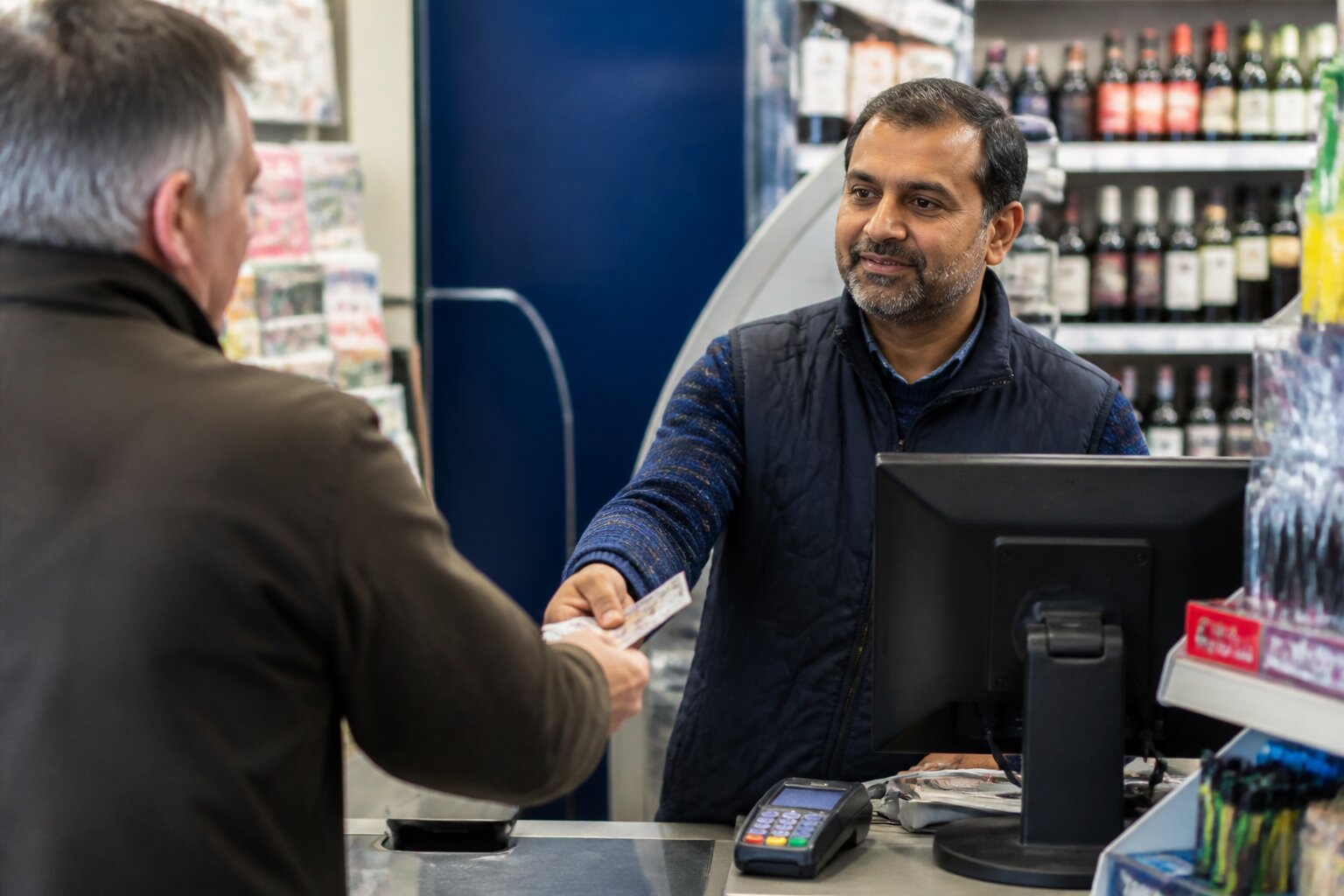
Ever wondered if you can still walk into a shop and buy a lottery ticket the old-fashioned way? With so much focus on online entries, it’s easy to forget the experience of picking numbers in person.
Whether you enjoy the chat at the counter or prefer cash over cards, many people still like buying tickets from their local shop. Read on to find out where you can buy in person, how the process works, what to bring, and how to look after any tickets you buy.
What Types Of Lottery Tickets Can You Buy In Shops?
In shops you’ll typically see two main categories: draw-based tickets and scratchcards.
Draw-based tickets cover games such as National Lottery draws, where you choose numbers and wait for a scheduled draw. These tickets are printed at the till and record your entry for the specified draw date. Scratchcards provide instant results: you scratch off a panel to reveal symbols or numbers and see immediately if you’ve won. Scratchcards come in different price points and prize structures, so the choice depends on how much you want to stake and the type of play you prefer.
All retailers are required to prevent sales to anyone under 18, so staff will carry out age checks and may ask for ID. Playing should be a considered choice: set personal spending limits and stick to them to keep play affordable and controlled.
Where Can You Buy Lottery Tickets On The High Street?
You can find lottery products in a wide range of high street locations: supermarkets, local convenience stores, newsagents, petrol stations and many post offices. These retailers operate under official licences and follow regulatory rules, including age verification at the point of sale.
Shops are also expected to make information about safer play available, and some will display leaflets or posters with guidance and support contacts. Buying from a recognised retailer gives you clear routes for validation and prize claims should you win.
If you want to know how the buying process looks in practice, the next section explains what happens at the counter.
How Does The In-Store Buying Process Work?
The in-store purchase is straightforward but governed by a few routine checks. Tell the cashier which game or scratchcard you want. For draw-based games you can complete a play slip to pick numbers or request a machine-selected set; the till will print a ticket showing your entry. For scratchcards you receive the card immediately after any required age check.
Cashiers may ask for photo ID if a customer appears under 25. The printed ticket or scratched card is your proof of purchase and must be kept safe for any potential claim. Retailers will validate small prizes at the till; for larger amounts they will guide you through the forms and verification needed to claim.
Knowing what to bring makes this process even quicker, so the next section covers the practical items to have with you.
What Do You Need To Bring With You?
Bring valid photo ID if you look under 25 — a driving licence or passport is usually acceptable. Most shops accept both cash and debit cards, so have your preferred payment method ready; some smaller outlets may prefer cash for low-value purchases.
You don’t normally need to provide personal details when buying, unless claiming a substantial prize. Keep your ticket intact and sign the back when possible to help establish ownership. With these simple steps done, you’ll be ready to buy and keep your purchase secure.
Next, a brief note about payment methods clarifies which are permitted at the till.
Are There Different Payment Options Available?
Shops typically accept cash and debit cards for lottery purchases. Most retailers will take debit card payments using chip and PIN or contactless where available, making transactions quick and straightforward. Credit cards are not an acceptable payment method for gambling products, so retailers will refuse them in line with regulations and responsible gambling guidance.
Using funds you already have helps keep spending within your own limits, which supports safer play. Paying with cash or a debit card makes it easier to track how much you have spent in a single visit, and most shops will provide a receipt so you can check your tickets and your outlay. Individual retailers may have small differences in how they handle large transactions or refunds, but the focus is on preventing unauthorised borrowing and encouraging responsible behaviour.
With payment taken care of, it’s easy to see why some people still prefer the in-person experience — the following section explores those reasons.
Why Do Some People Prefer Buying In Shops Over Online?
Buying in person offers immediate possession of a ticket and the social aspect of speaking to staff or neighbours. For many, holding a physical ticket feels more tangible than an email confirmation, and the simple interaction at the counter can be part of the appeal.
Others value the privacy of an offline purchase — there’s no need to create an account or share payment details online if they prefer not to. However you choose to play, keep spending within personal limits so it stays a manageable form of entertainment.
Below are a couple of common misconceptions about buying in shops, and why they don’t hold up.
What Are The Common Myths About Buying Lottery Tickets In Shops?
One myth is that shops no longer sell lottery tickets. In fact, licensed retailers across the country still sell tickets under regulated conditions, and you can buy most national lottery games from many local convenience stores and newsagents. These retailers must follow rules, including age verification, and operate under licence from the lottery operator.
Another myth is that payouts are slower for in-store wins. While very large prizes require a formal claims process and identity checks, smaller winnings are normally validated and paid at the counter fairly quickly once the ticket is checked. It is sensible to check your ticket carefully and to keep your receipt, as shops will need to verify a win before handing over money.
There are also misconceptions about ticket security and responsibility. You should sign the back of a ticket and keep it safe, because an unsigned ticket can cause disputes about ownership. Remember that there are time limits for claiming prizes, so it is important to check the rules for each game and make a claim within the specified period.
Separating fact from fiction helps you make clear choices about where and how to play. Playing should always be done responsibly, in line with legal age limits and the terms set out by the operator.
What Should You Do If You Win?
Check your ticket carefully and as soon as possible. Shops can validate tickets using their terminal, and many people also check results in newspapers or on official websites. For smaller prizes, the retailer will usually pay you on the spot once the ticket is validated, but always wait until the validation is complete before leaving the premises.
For larger prizes, the shop will give clear instructions on how to submit a claim, what identification is required and where to send the ticket. Different games and operators have different claim processes and time limits, so read the rules for the specific game you played and follow the official guidance provided by the retailer or operator.
Keep your ticket safe and legible, and sign it where appropriate to safeguard ownership. It can help to make a photocopy or take a clear photograph of the ticket and store these copies separately in case the original is lost or damaged. If you are unsure about the process or the size of the prize, the retailer or the game operator will provide information about the official claim procedure or point you to authorised help.
Limitations & Legal Requirements For In-Store Purchases
The legal framework for shop sales is straightforward: you must be at least 18 to buy. Retailers will ask for photographic proof of age where there is any doubt, and this is a standard part of keeping sales legal and compliant. Shops may also adopt their own policies to encourage responsible spending, for example by limiting large or repeated purchases, refusing sales where someone appears intoxicated, or asking customers to pause and consider their spending.
Credit cards cannot be used for gambling purchases, in line with current payment rules, so retailers accept other forms of payment instead. Individual shops may set additional controls on transactions, such as caps on the number of tickets sold in one sale or checks to prevent bulk buying that could indicate problematic behaviour.
If gambling starts to feel worrying, confidential support services are available and retailers should be able to point customers towards them. Information on help and self-exclusion schemes is commonly displayed or available on request, and industry guidance exists to help staff recognise signs of harm and keep play safer. Seeking support early can help prevent problems escalating, and all enquiries to support services are treated with privacy and discretion.
How Are Physical Tickets Protected Against Loss Or Damage?
Physical tickets include security features such as serial numbers and barcodes to allow retailers and operators to validate them. Signing the back of a ticket adds ownership protection, while storing tickets in a wallet or a safe place reduces the risk of damage or loss.
If a ticket is badly damaged, it may still be possible to make a claim, but having readable key details speeds up and simplifies the process. Treat tickets carefully from the moment you buy them so any potential claim is straightforward.
This overview should make it clear how buying in shops works today and what to expect when you buy a ticket in person.
**The information provided in this blog is intended for educational purposes and should not be construed as betting advice or a guarantee of success. Always gamble responsibly.